Project Information on Petrol Nozzles

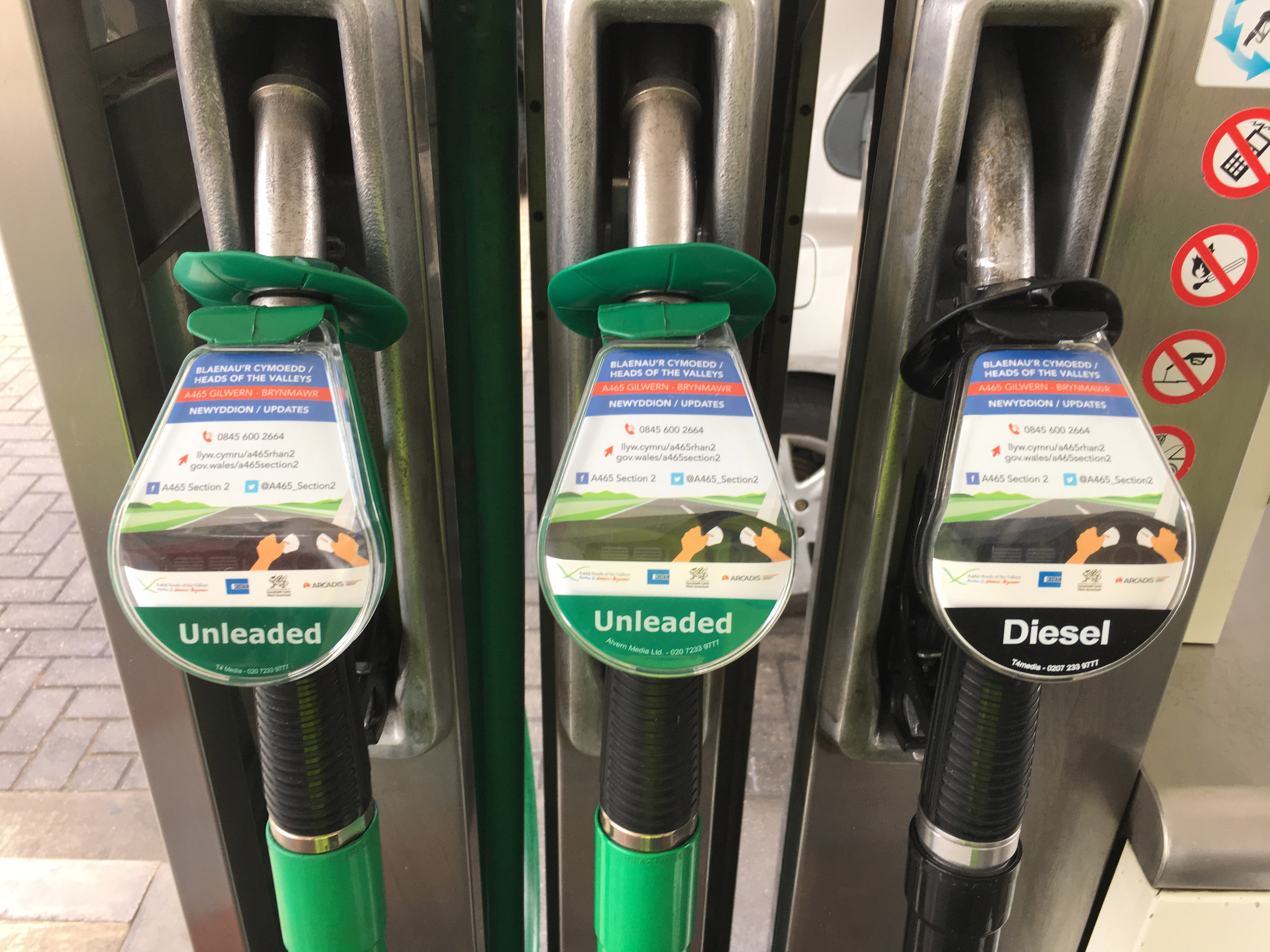
Communicating project information to the community is essential to fostering a positive relationship with the public and keeping them updated on progress. However, on some sites – such as highway schemes – it can be hard to get this information across.
See the examples below for how one site addressed this:
- The site used traditional communication channels such as Facebook, Twitter, project website, email distribution list, local adverts, press notices and a 24/7 project helpline, but sought alternative means of communication.
- Because on average 21,000 vehicles use the A465 (Gilwern – Brynmawr) every day, they decided to place adverts on petrol nozzles at four local petrol stations around the site.
- The site drew on research that found that motorists hold the pump for 2-3 minutes, with the prospect of seeing an advert for an average of 52 seconds and that 7/10 motorists recall seeing the advert.
- The initiative was deemed a success, as during the campaign the site did not advertise anywhere else and still saw an increase in their social media traffic.
This initiative was a new way of communicating with the public, and the site is currently looking to expand the adverts to petrol stations further afield from the direct locality of the works.
Footer Reference
Monitor report. Costain. Monmouthshire. September 2017.
About this entry
About the author
CCS Best Practice Hub Administrator
Research Assistant
Entries by this author 77
View all entries by CCS Best Practice Hub Administrator
Company Information

Considerate Constructors Scheme
www.ccsbestpractice.org.uk
The Scheme does not promote or endorse any products, goods or services. For more information, click here.